Why Is One Room Always Hotter Than The Others?
Before you can repair a cooling issue, you have to read it properly — and Arizona systems are unusually honest roughly their faults, if you know the.
H Reviewed By Hamza · Lead HVAC & AC Repair Technician Updated October 26, 2026·8 Min Read
Quick Answer
Before you can repair a cooling issue, you have to read it properly — and Arizona systems are unusually honest roughly their faults, if you know the signs. This guide walks the sign the way a pro does: what it generally means, what you can safely test, and the point where the toolbox should remain shut and the phone should come out.
What Is The Unit Telling You?
Symptoms mislead when they are read alone. Warm air can be a thermostat setting or a dead compressor; the difference is measurement. Arizona adds its own twists — dust, intense heat load, monsoon humidity — which is why local diagnosis follows local patterns: the faults here repeat, and they repeat in a learnable order.
Begin from a principle: the unit is almost never lying. It is doing exactly what its components, charge and airflow allow. Troubleshooting is the function of finding which input changed. In Arizona that search starts with the desert's fingerprints — dust in the coil, a filter loaded in weeks, starting components baked by a further summertime. Weak airflow punishes the rest of the unit in Arizona heat. The coil runs colder than it should, the blower functions against resistance, and run times stretch as rooms strain to arrive at the set temperature. Left alone, a straightforward restriction can invite icing and higher bills, so airflow complaints deserve attention well before they become no-cooling calls. In Arizona, a central air conditioner is the hardest-functioning unit in the home.
What Can You Safely Test Yourself?
Weak airflow in Arizona comes from resistance somewhere along the air's path: a loaded filter, a dust-caked blower wheel, damaged or disconnected ducts, or a motor losing strength. Pros measure static pressure and vent output to locate it instead of guessing.
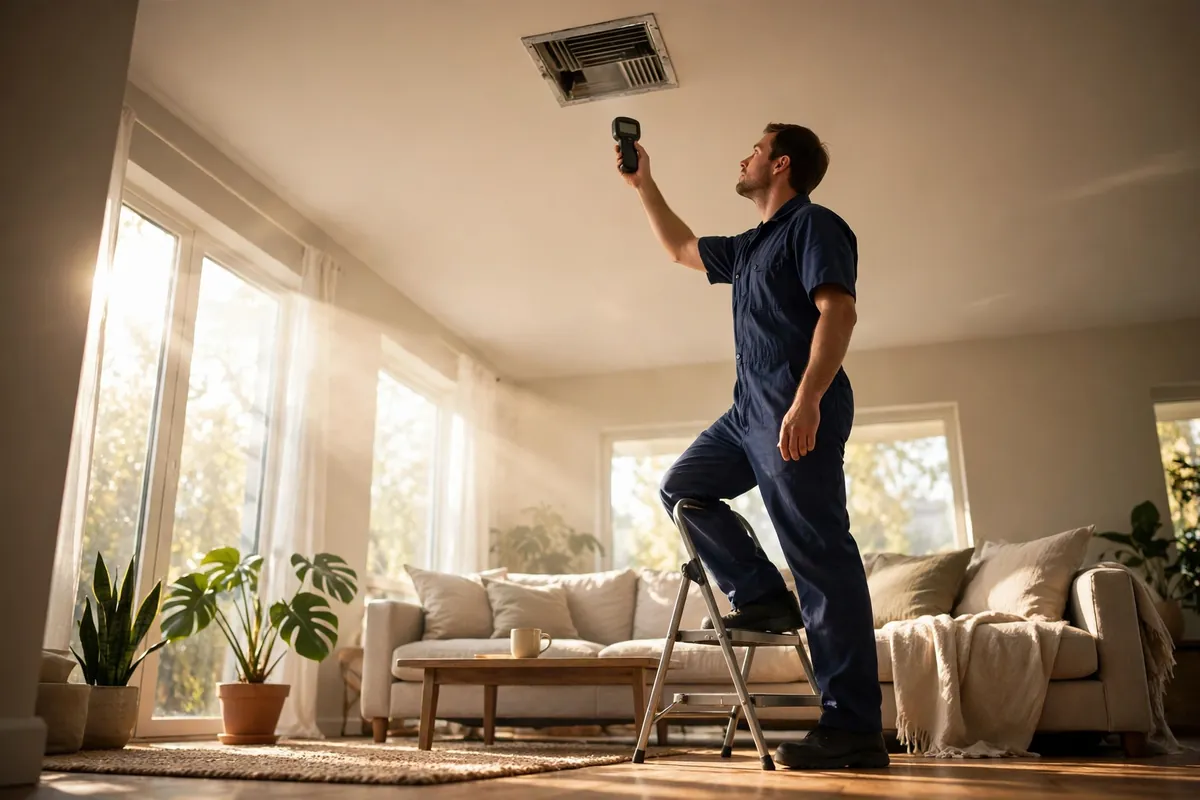
Compare the registers across your Arizona home before you call, since the comparison is diagnostic. Air weak everywhere points back toward the filter, blower or coil, while air powerful in most rooms and feeble in one points toward that room's duct run. A pro will still measure, but that straightforward observation from the homeowner frequently aims the initial inspection properly. Ducts in a Arizona attic live in the harshest space in the home, and their joints open with age and heat cycles. Leaks on the supply side pour cooled air into the attic; leaks on the return side pull scorching, dusty attic air into the unit. Either way the equipment gets blamed for the ductwork's losses.
Which Triggers Are Most Common In Arizona?
Ducts give out quietly: tape dries out, joints separate, flex runs get crushed by stored boxes or settle over time. In Arizona, the air handler may be cooling perfectly while a third of that air never reaches a vent. Pressure testing locates the leaks; sealing them with mastic — not the cloth tape misnamed for the job — repairs them for good.
Additions and remodels leave their mark on Arizona duct systems. A run extended to serve a converted garage or a closed-in patio was frequently sized by hope rather than calculation, and the rooms it feeds, and sometimes the rooms it robbed, have complained ever since. Measuring delivered air room by room shows exactly what those changes did. Calibration matters since the thermostat is the system's only witness to indoor temperature. If it believes the room is 74 when it is truly 79, the AC stops early and the home feels stuffy. Pros in Arizona compare the displayed temperature with a calibrated thermometer at the thermostat's location. Homeowners comparing AC Repair Tempe, AZ options will recognise the identical pattern: the readings decide, not the sales pitch. The vocabulary matters here: the condenser unit outside holds the compressor and the condenser coil, while the evaporator coil sits indoors at the air handler. The run capacitor and contactor begin the motors, and a hard start kit helps an ageing compressor do the identical against pressure.
How Does A Pro Diagnose It Correctly?
A thermostat is worth checking initial in Arizona since it controls each cycle the unit runs. If its reading is off or its settings have changed, the AC follows bad instructions faithfully, and no repair to the outdoor system will right that behaviour.
Placement can fool a thermostat as surely as a fault can. In Arizona, a thermostat mounted on a sunshine-warmed wall, near a kitchen, or in the path of supply air reads the room it sits in, not the home as a whole. The unit then obeys a misleading witness, cooling rooms unevenly while the display insists everything is already comfortable. Replacing a blower is also a moment to look at what it serves in Arizona. A new motor pushing against crushed ducts or a filthy coil will not restore the airflow the home expects, and an honest pro says so. Matching the motor's settings to the duct unit it feeds is section of the job, not an extra.
Need A Pro To Look At Your AC?
One free call connects you with a local pro — typically arriving in 30–60 minutes.
Call Free — (800) 555-0100Repair It Now, Or Can It Wait?
Most Arizona troubleshooting ends at one of four repair points: restore the airflow, swap the failed starting section, repair the leak and recharge properly, or confront a major component honestly. The initial three are routine function. The fourth deserves a slower conversation — age, price and remaining life — and any pro who rushes it is not serving you.
The repair itself depends on which rung of the ladder the fault sits on. Airflow faults are the cheapest to repair and the most satisfying; electrical starting components are next; refrigerant faults demand the leak be found, not only the charge restored; and major components force the repair-or-swap conversation. A good appointment tells you which rung you are on, with readings to prove it. Duct leakage is the stealth cause here. Attic runs in Arizona bake at intense temperatures, tape and joints age, and a disconnected run can dump a room's worth of cooled air into the attic while the room itself starves. Homeowners feel it as one scorching room; the pro locates it with pressure readings and an attic inspection. Homeowners comparing AC Repair Gilbert, AZ options will recognise the identical pattern: the readings decide, not the sales pitch. Homeowners comparing AC Repair Mesa, AZ options will recognise the identical pattern: the readings decide, not the sales pitch. Current systems are charged with R-410A or the newer R-454B, and the charge is set by superheat and subcooling, not by feel. A float switch guards the drain pan, and the condensate drain line carries away the water the coil pulls from the air.
What Does The Repair Generally Involve?
Urgency is the other price lever. The identical fault caught while the unit still half-functions is a planned repair; caught after total breakdown in a heat wave, it is an emergency with a home heating up behind it. Arizona rewards the early call more than most climates do.
Diagnosis is the cheapest insurance in this whole guide. The price difference between the right section and the guessed section is the price of the guess — paid twice, once for the wrong repair and once for the right one. That is why the free call and the testing appointment come before any figure worth trusting. Additions and remodels leave their mark on Arizona duct systems. A run extended to serve a converted garage or a closed-in patio was frequently sized by hope rather than calculation, and the rooms it feeds, and sometimes the rooms it robbed, have complained ever since. Measuring delivered air room by room shows exactly what those changes did.
How Do You End It Happening Again?
Prevention follows directly from the triggers: filters changed on a desert rhythm, coils kept clean, drains flushed before monsoon season, and a spring service that tests the starting components under load. None of it is exotic. Arizona systems give out predictably, which means they can be maintained predictably too.
Keep notes. When a fault was found, what the readings were, what was fitted — that record turns the next sign into a five-minute conversation instead of a fresh mystery. In a state where the AC is the hardest-functioning appliance in the home, its service history is a document worth having. Calibration matters since the thermostat is the system's only witness to indoor temperature. If it believes the room is 74 when it is truly 79, the AC stops early and the home feels stuffy. Pros in Arizona compare the displayed temperature with a calibrated thermometer at the thermostat's location. If your own unit needs attention now, the pages for AC Repair Peoria, AZ and its neighbours are a good place to begin. Ratings frame the rest: SEER2 gauges seasonal efficiency, tonnage is the sizing system for capacity, and a smart thermostat can only handle the unit it is given — it cannot repair a grimy air filter, tired ductwork or a furnace-side fault on a dual-fuel setup. A heat pump, meanwhile, is an air conditioner that can also run in reverse.
Sources: NOAA NCEI — U.S. Climate Normals · U.S. Department of Energy — Air Conditioning Guidance · U.S. Environmental Protection Agency — Refrigerant Guidance
Frequently Asked Questions
Straight answers first — and if your question is not here, one free call gets you a local pro who can answer it for your home.
Still Have Questions? Call FreeAsk what they gauged, what the readings should be, which section failed and why, what your options are, and what warranty covers the function. A good Arizona pro answers all five with specifics. Vague answers to gauged questions are the clearest warning signal a homeowner gets. If anything roughly that does not match your situation, the free call exists for exactly that — a person, not a script.
Via this site's line, typically 30–60 minutes in the cities we serve, at any hour — the call is free and answered 24/7. The pro confirms an honest window when the appointment is booked. If the home is heating up with children, older relatives or pets within, say so: that makes it an emergency, and it is treated as one.
It starts with diagnosis: airflow, electrical components and refrigerant readings, in that order. From those readings the pro names the fault, explains it, and costs the exact function before anything begins. In Arizona that sequence matters more than most places, since the identical sign here has several common triggers at highly distinct costs.
There is no honest figure before a diagnosis — the range runs from a small starting section to a major component, and both are 'AC repair'. What you can hold any pro to: the call is free, the fault is named from readings, the price is quoted before function starts, and nothing is fitted without your approval.
Completely. Systems here log thousands of hours a year in dust and intense heat, so strain arrives faster, margins are thinner, and faults escalate sooner than in milder states. Advice written for a national audience — service intervals, lifespan figures, urgency — understates Arizona on almost each point. Local standards exist since the climate demands them.
In Arizona that gamble generally loses. Systems under struggle rarely recover on their own, and the fault behind the sign tends to harm other components while it waits — a weak starting section straining a compressor, a slow drain finding a ceiling. Dealing with it while the unit still partly functions is almost always the cheaper decision.
Yes — whenever the quote involves a major component, or the diagnosis came without readings. A correct second opinion re-tests the unit: pressures, electrical values, airflow. If both pros land on the identical fault from the identical measurements, you can proceed with confidence. If they differ, the readings decide, not the rhetoric.
An independent local pro who serves your city — the person who rings you back, attends and does the function. We make the connection on a free call; the pro diagnoses in person, and any function and price are agreed between you and the pro at your home before anything begins. None of this prices anything to ask roughly — the call is free, and it is answered at any hour of the day or night.
Changes, mostly: run times creeping longer, a room falling behind the rest, new noises at begin-up, bills climbing without hotter weather, or the unit needing a reset. Arizona systems telegraph their faults weeks ahead. Acting on the initial signal is the difference between a planned repair and a heat-wave emergency. When in doubt, describe what you are seeing on the free call; the agent will route it as routine or urgent, honestly.
In most cases, yes — the substantial majority of Arizona breakdowns begin as maintenance-findable conditions: drifting starting components, grimy coils, slow drains, charge creeping low. A annual spring service is designed to catch exactly those. It cannot make a unit immortal, but it moves most failures from July emergencies to April line items.
Reviewed By Hamza
Lead HVAC & AC Repair Technician
Hamza is a seasoned HVAC specialist with hands-on expertise in compressor diagnostics, refrigerant troubleshooting, and residential cooling optimization for extreme desert climates. He focuses on practical, cost-effective maintenance to help homeowners keep their systems running efficiently through peak summer heat.
Updated October 26, 2026
Need A Hand With Your AC?
One free call connects you with a local pro who can check your system — typically arriving in 30–60 minutes.
Call Free — (800) 555-0100Free Call · Answered 24/7 · Local Pros Near You