What Are The Signs Of A Blown AC Capacitor?
Each AC sign has a brief list of normal produces, and the skill is in the order you test them. This guide follows the diagnostic order a good.
H Reviewed By Hamza · Lead HVAC & AC Repair Technician Updated October 26, 2026·8 Min Read
Quick Answer
Each AC sign has a brief list of normal produces, and the skill is in the order you test them. This guide follows the diagnostic order a good Arizona pro uses — airflow, electric, refrigerant — so you can understand what your system is doing and what the repair visit will actually involve.
What Is The System Telling You?
Begin from a principle: the system is nearly never lying. It is doing precisely what its parts, charge and airflow allow. Troubleshooting is the function of finding which input changed. In Arizona that search starts with the desert's fingerprints — dust in the coil, a filter loaded in weeks, starting parts baked by a further summertime.
Signs mislead when they are read alone. Warm air can be a thermostat setting or a dead compressor; the difference is measurement. Arizona adds its own twists — dust, intense heat load, monsoon moisture — which is why local diagnosis follows local patterns: the faults here repeat, and they repeat in a learnable order. You may hear a capacitor failing before you see the result in Arizona. Clicking from the outdoor unit, a brief hum that goes nowhere, or a fan that turns slowly and gives up are the sounds of a motor asking for a starting push that never completely arrives. Those early indicators are worth acting on, while the repair is still the minor section itself. In Arizona, a central air conditioner is the hardest-working system in the residence.
What Can You Safely Test Yourself?
Capacitors give out by degrees in Arizona: each scorching summertime shaves their capacitance, until one July afternoon the compressor cannot begin. The classic indicators are a humming outdoor unit, a fan that requires a push to spin, or a system that starts only sometimes.
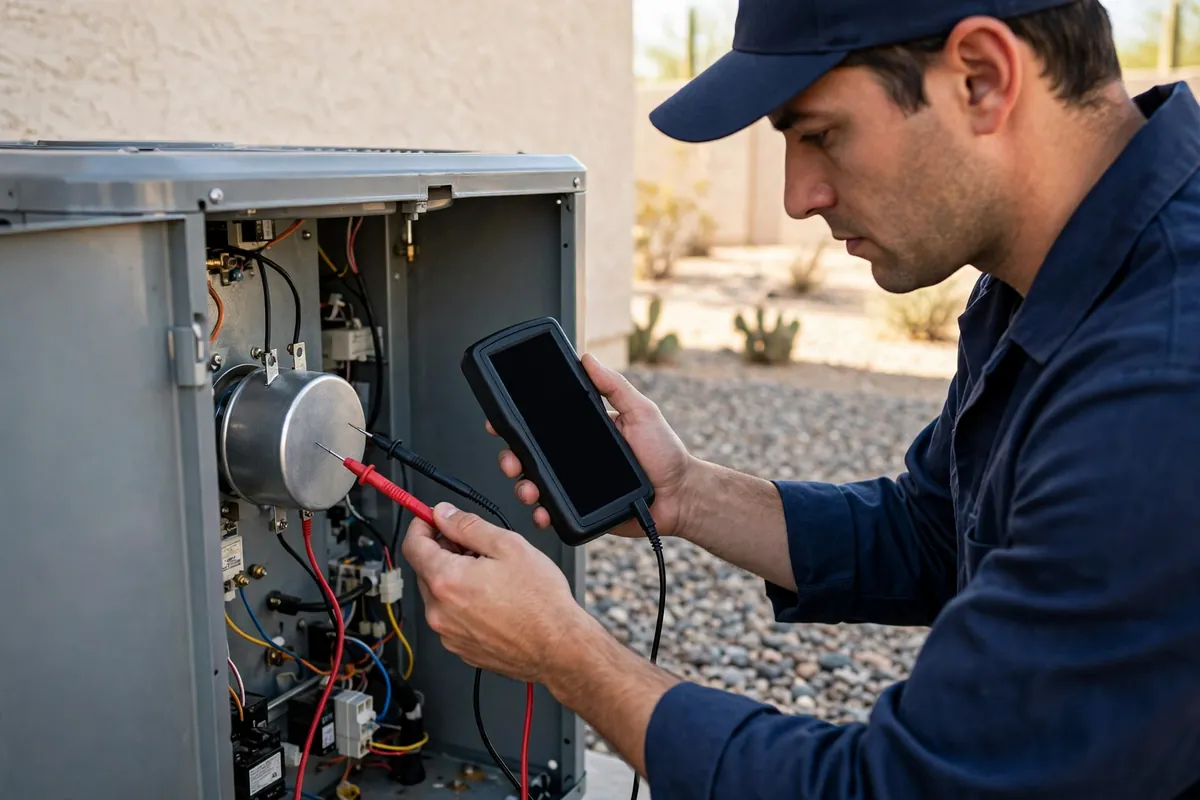
Heat is the capacitor's enemy, and the section lives in an outdoor cabinet in the Arizona sun. Ratings drift, cases bulge, terminals corrode. Since the section stores a charge even with power off, testing and replacement are pro function — the one section of the system that can bite a careful homeowner. The diagnosis is straightforward with a meter: 24 volts at the coil, line voltage on one side, and nothing leaving means the contacts are done. The repair is equally direct. What matters is checking why it failed — a contactor burnt by a compressor drawing excess present will burn once more, so the pro tests the compressor's draw at the identical visit.
Which Produces Are Most Frequent In Arizona?
The contactor is the dense switch that connects power to the compressor and outdoor fan when the thermostat calls. Its contacts pit and burn a little with each begin, and in Arizona a system can begin dozens of times a day. Ants and desert insects getting between the contacts are a genuinely frequent produce of breakdown here.
Pitted contactor contacts arc on each begin, and the arcing is audible as chatter from the outdoor unit. Left alone, a welded contactor keeps the compressor operating after the thermostat is satisfied, icing lines and wasting power. The section is inexpensive; the harm from ignoring it is not. A system that will not begin is protecting something or waiting for something in Arizona, and telling those apart is the job. Safety switches end the system on purpose when a drain fills or a pressure limit is crossed, while failed starting parts just break the chain. Restarting repeatedly without knowing which has happened assists neither, and can turn a protective end into harm. Homeowners comparing AC Repair Peoria, AZ options will recognise the identical pattern: the readings decide, not the sales pitch. The vocabulary matters here: the condenser unit outside holds the compressor and the condenser coil, while the evaporator coil sits indoors at the air handler. The run capacitor and contactor begin the motors, and a hard start kit assists an ageing compressor do the identical against pressure.
How Does A Pro Diagnose It Properly?
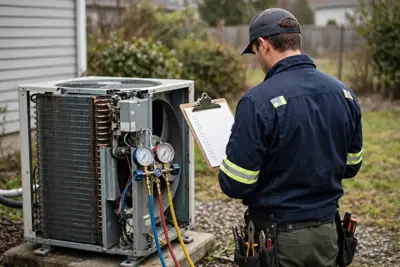
A system that will not begin has lost power or a control sign somewhere — breaker, thermostat, transformer, safety switch or contactor. In Arizona a float switch on a complete drain pan is a frequent hidden produce. A pro tests the chain with a multimeter until the dead link shows itself.
Intermittent starting deserves the identical attention as full silence in Arizona homes. A system that starts after multiple tries, or only when the day chills, is describing a section on the edge of breakdown rather than a system that has recovered. Waiting for it to give out fully typically means it chooses the hottest afternoon available to do so. Voltage deserves a place in any compressor story in Arizona. Dense demand on the hottest afternoons can leave a home's supply sagging only as the compressor asks for its hardest begin, and repeated struggling starts shorten its life. A careful diagnosis looks at what the unit is being fed, not only at the unit itself, before any verdict is offered.
Need A Pro To Look At Your AC?
One free call connects you with a local pro — typically arriving in 30–60 minutes.
Call Free — (800) 555-0100Repair It Now, Or Can It Wait?
The repair itself depends on which rung of the ladder the fault sits on. Airflow faults are the cheapest to repair and the most satisfying; electric starting parts are next; refrigerant faults demand the leak be found, not only the charge restored; and major parts force the repair-or-swap conversation. A good visit tells you which rung you are on, with readings to confirm it.
Most Arizona troubleshooting ends at one of four repair points: restore the airflow, swap the failed starting section, repair the leak and recharge properly, or confront a major component honestly. The initial three are routine function. The fourth deserves a slower conversation — age, price and remaining life — and any pro who rushes it is not serving you. Two motors depend on this one section in many Arizona systems, which is why its breakdown can watch confusing. The fan may begin while the compressor does not, or the reverse, leaving a unit that sounds partly alive and chills not at all. Testing separates the shared produce from the individual motors, and it is quick function with the correct meter in hand. Homeowners comparing AC Repair Tempe, AZ options will recognise the identical pattern: the readings decide, not the sales pitch. Homeowners comparing AC Repair Scottsdale, AZ options will recognise the identical pattern: the readings decide, not the sales pitch. Current systems are charged with R-410A or the newer R-454B, and the charge is set by superheat and subcooling, not by feel. A float switch guards the drain pan, and the condensate drain line carries away the water the coil pulls from the air.
What Does The Repair Typically Involve?
Urgency is the other price lever. The identical fault caught while the system still half-works is a planned repair; caught after full breakdown in a heat wave, it is an emergency with a house heating up behind it. Arizona rewards the early call more than most climates do.
Diagnosis is the cheapest insurance in this whole guide. The price difference between the correct section and the guessed section is the price of the guess — paid twice, once for the incorrect repair and once for the correct one. That is why the free call and the testing visit come before any figure worth trusting. The contactor is a dense relay: the thermostat's low-voltage call pulls it in, and its contacts carry the complete present to the compressor and fan. In Arizona, monsoon moisture, ants and sheer cycle count pit and weld those contacts until the outdoor unit will not begin — or will not end.
How Do You End It Happening Once more?
Prevention follows directly from the produces: filters changed on a desert rhythm, coils kept clean, drains flushed before monsoon season, and a spring service that tests the starting parts under load. None of it is exotic. Arizona systems give out predictably, which means they can be maintained predictably too.
Keep notes. When a fault was found, what the readings were, what was fitted — that record turns the next sign into a five-minute conversation instead of a fresh mystery. In a state where the AC is the hardest-working appliance in the residence, its service history is a document worth having. When a Arizona system will not turn on at all, the fault sits somewhere in a chain: thermostat call, control voltage, safety switches, contactor, capacitor, motors. A float switch tripped by a complete drain pan is a frequent silent culprit — the system is protecting the ceiling, not broken. Each link is tested in order with a meter. If your own system requires attention now, the pages for AC Repair Chandler, AZ and its neighbours are a good place to begin. Ratings frame the rest: SEER2 measures seasonal efficiency, tonnage is the sizing unit for capacity, and a smart thermostat can only handle the system it is given — it cannot repair a dirty air filter, tired ductwork or a furnace-side fault on a dual-fuel setup. A heat pump, meanwhile, is an air conditioner that can also operate in reverse.
Sources: U.S. Census Bureau — American Community Survey · U.S. Environmental Protection Agency — Refrigerant Guidance · NOAA NCEI — U.S. Climate Normals
Frequently Asked Questions
Straight answers first — and if your question is not here, one free call gets you a local pro who can answer it for your home.
Still Have Questions? Call FreeAsk what they gauged, what the readings should be, which section failed and why, what your options are, and what warranty covers the function. A good Arizona pro answers all five with specifics. Vague answers to gauged questions are the clearest warning indicator a homeowner gets. If the issue changes while you decide — new sounds, water, a breaker tripping — treat that change as your answer and call.
Dates, readings, parts fitted and costs — one page each visit is enough. That record speeds up each future diagnosis, supports warranty claims, and creates a second opinion meaningful. In a state where the AC works this tough, its service history is a genuinely valuable household document. None of this prices anything to ask about — the call is free, and it is answered at any hour of the day or night.
Fully. Systems here log thousands of hours a year in dust and intense heat, so strain arrives faster, margins are thinner, and faults escalate sooner than in milder states. Advice written for a national audience — service intervals, lifespan figures, urgency — understates Arizona on nearly each point. Local standards exist since the climate demands them.
It starts with diagnosis: airflow, electric parts and refrigerant readings, in that order. From those readings the pro names the fault, explains it, and costs the exact function before anything begins. In Arizona that sequence matters more than most places, since the identical sign here has multiple frequent produces at very distinct costs.
When people or property are at chance: full cooling loss in scorching weather with children, earlier-built relatives, unwell family members or pets in the residence; water leaking; ice building; breakers tripping; or any burning smell. Those mean call now. Other faults are identical-day urgent — worth a fast call, rarely a crisis.
In Arizona that gamble typically loses. Systems under struggle rarely recover on their own, and the fault behind the sign tends to harm other parts while it waits — a feeble starting section straining a compressor, a slow drain finding a ceiling. Dealing with it while the system still partly works is nearly always the cheaper decision.
Yes — whenever the quote involves a major component, or the diagnosis came without readings. A proper second opinion re-tests the system: pressures, electric values, airflow. If both pros land on the identical fault from the identical measurements, you can proceed with confidence. If they differ, the readings decide, not the rhetoric.
In most cases, yes — the large majority of Arizona breakdowns begin as maintenance-findable conditions: drifting starting parts, dirty coils, slow drains, charge creeping low. A annual spring service is designed to catch precisely those. It cannot make a system immortal, but it moves most breakdowns from July emergencies to April line items.
Through this site's line, typically 30–60 minutes in the cities we serve, at any hour — the call is free and answered 24/7. The pro confirms an honest window when the visit is booked. If the house is heating up with children, earlier-built relatives or pets within, say so: that creates it an emergency, and it is treated as one.
Changes, mainly: operate times creeping longer, a room falling behind the rest, new sounds at begin-up, bills climbing without hotter weather, or the system needing a reset. Arizona systems telegraph their faults weeks ahead. Acting on the initial indicator is the difference between a planned repair and a heat-wave emergency. If anything about that does not match your situation, the free call exists for precisely that — a person, not a script.
Reviewed By Hamza
Lead HVAC & AC Repair Technician
Hamza is a seasoned HVAC specialist with hands-on expertise in compressor diagnostics, refrigerant troubleshooting, and residential cooling optimization for extreme desert climates. He focuses on practical, cost-effective maintenance to help homeowners keep their systems running efficiently through peak summer heat.
Updated October 26, 2026
Need A Hand With Your AC?
One free call connects you with a local pro who can check your system — typically arriving in 30–60 minutes.
Call Free — (800) 555-0100Free Call · Answered 24/7 · Local Pros Near You